
Why Specialist K-Beauty Stores Still Matter in Europe's Beauty Market
As K-Beauty becomes more mainstream across Europe, specialist retailers are not necessarily becoming less relevant. Their advantage increasingly lies in assortment depth, product discovery, expert advice and a store experience dedicated entirely to Korean beauty.
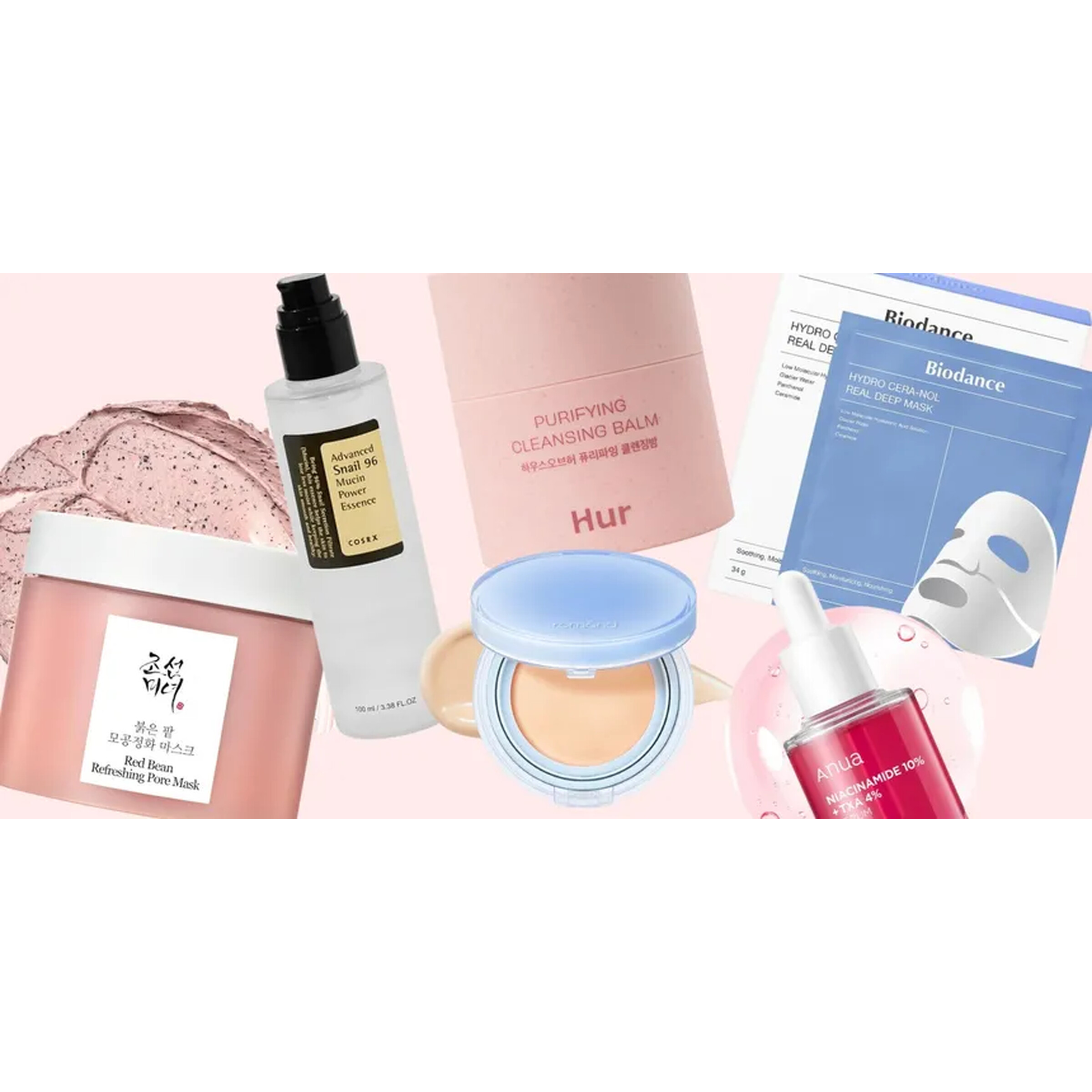
K-Beauty is no longer confined to specialist websites or a small community of skincare enthusiasts.
Korean skincare brands are increasingly visible across mainstream European beauty retail, from major beauty chains to department stores and online marketplaces. Yet at the same time, specialist K-Beauty retailers continue to expand their physical presence.
The latest example comes from the United Kingdom.
On 21 August 2026, PURESEOUL opened its first Scottish store at St James Quarter in Edinburgh, continuing the retailer's physical expansion across the UK. The location combines a broad Korean beauty assortment with product discovery, specialist advice and dedicated in-store experiences.
For the European beauty industry, the expansion highlights an important retail trend: as K-Beauty becomes more mainstream, specialist stores may not become less relevant. Instead, their role could become more clearly defined.
K-Beauty Is Moving Further Into Physical Retail
The expansion of specialist K-Beauty stores reflects a wider evolution in the category.
Consumers who once discovered Korean skincare primarily through social media and international e-commerce platforms can increasingly find these products in physical stores.
PURESEOUL's Edinburgh opening is part of a broader UK expansion strategy. The retailer had already expanded into cities including London, Birmingham and Bath, with Edinburgh representing its first move into Scotland.
The significance extends beyond the opening of another beauty shop.
Physical expansion suggests that specialist K-Beauty retail can support sufficient demand to justify dedicated locations even as mainstream retailers increase their own Korean beauty assortments.
What can a specialist K-Beauty retailer offer that a general beauty retailer cannot?
Assortment Depth Can Become a Competitive Advantage
One of the clearest answers is choice.
Large beauty retailers typically need to divide shelf space between numerous categories, brands and markets. A specialist retailer can dedicate significantly more space to Korean skincare, cosmetics and emerging product formats.
PURESEOUL's Edinburgh assortment includes established names such as Medicube, Torriden and Beauty of Joseon, alongside newer launches and brands with more limited UK distribution.
For consumers already familiar with K-Beauty, this depth matters.
Once customers move beyond their first viral cleanser, serum or sunscreen, they may begin looking for more specific products: different formulations, emerging ingredients, niche brands or complete skincare routines.
For retailers, assortment depth can therefore become a differentiator rather than simply a question of carrying more SKUs.
Discovery Is Becoming Part of the Store Experience
Another advantage of specialist retail is the ability to turn product discovery into an experience.
PURESEOUL's Edinburgh location includes features such as a dedicated minis area and a sheet-mask bar, alongside a broad selection of Korean skincare and beauty products. Trained staff are also available to provide product guidance and personalised recommendations.
This is particularly relevant to K-Beauty because the category evolves quickly.
New ingredients, formats and routines regularly emerge from the Korean market. Consumers may encounter terms such as PDRN, retinal, fermented ingredients or hydrogel masks online without necessarily understanding which product is suitable for them.
A physical specialist store can bridge that gap.
Instead of simply displaying products on shelves, it can help customers discover, understand and compare them.
Expertise Matters in an Increasingly Complex Category
The growth of K-Beauty has created an interesting paradox.
The category is becoming more accessible, but it is also becoming more complex.
Consumers now have access to hundreds of products addressing concerns including hydration, pigmentation, acne, barrier repair, ageing and sensitivity.
More choice does not automatically make purchasing easier.
This creates an opportunity for specialist retailers to position themselves around curation and expertise.
A consumer visiting a specialist store may not simply be looking for a particular brand. They may want to understand which cleanser works with their skin type, how to introduce an active ingredient or how several products can be combined into a routine.
That advisory role is much harder to reproduce through a marketplace listing or a shelf containing only a handful of Korean products.
PURESEOUL itself positions its boutiques around this specialist model, highlighting access to K-Beauty experts and guidance around its product assortment.
Specialist Retail and Mainstream Retail Can Coexist
The arrival of Korean beauty at major retailers does not necessarily mean specialist stores and mainstream beauty chains are competing for exactly the same customer journey.
They can serve different purposes.
A large beauty retailer can introduce K-Beauty to a broad audience by giving major Korean brands significant visibility.
A specialist retailer can then offer something different: deeper assortments, emerging brands, product education and a retail environment entirely dedicated to the category.
In this sense, mainstream adoption could actually support specialist retail.
The more consumers become familiar with Korean skincare, the larger the potential audience becomes for retailers capable of offering a deeper exploration of the category.
What Does This Mean for K-Beauty Brands?
For Korean brands entering Europe, the evolution of specialist retail creates another potential route to market.
Large chains can provide considerable visibility, but securing shelf space can be highly competitive — particularly for younger brands without established European awareness.
Specialist retailers and distributors can potentially provide an alternative path.
Their customers are already interested in the category, making them particularly suitable environments for introducing emerging brands, innovative formats and less familiar ingredients.
This can create a progression from discovery to validation to wider distribution.
A product may initially gain traction among K-Beauty enthusiasts before eventually reaching a broader retail audience.
What Does This Mean for European Distributors?
The trend also has implications further up the supply chain.
A specialist retailer carrying a deep and frequently changing assortment requires access to a similarly broad sourcing network.
For distributors, this increases the importance of being able to supply not only established bestsellers but also:
- emerging Korean brands;
- new product launches;
- trending ingredients and formats;
- complementary products within the same routine;
- sufficient inventory for rapid replenishment.
As K-Beauty retail matures, simply supplying a handful of viral products may become less valuable than helping retailers maintain a diverse, relevant and continuously evolving assortment.
This is where specialised B2B distribution can play an increasingly important role.
The Opportunity Goes Beyond Bestsellers
K-Beauty's first phase of European growth was heavily driven by individual products and brands achieving viral success.
The next phase could be broader.
Consumers are becoming familiar with Korean skincare as a category rather than simply recognising a few viral products.
That changes the opportunity for retailers.
From “Which K-Beauty product is trending?” to “How do we build a K-Beauty assortment customers will return to?”
That requires greater depth, stronger product knowledge and more sophisticated sourcing.
Specialist K-Beauty Retail Still Has a Role to Play
PURESEOUL's continued physical expansion illustrates an important point about the development of K-Beauty in Europe.
Mainstream adoption does not necessarily eliminate the need for specialists.
It may redefine their value.
As Korean beauty becomes easier to find, specialist retailers can differentiate themselves through assortment depth, discovery, expertise and customer experience.
For brands and distributors, that means Europe's K-Beauty opportunity is becoming more diverse.
Success will not depend solely on getting the most recognisable products onto the largest possible shelves. It will also depend on supporting retailers capable of introducing consumers to what comes next.
And as the European K-Beauty market matures, those specialist retailers may remain one of the industry's most important discovery channels.